By David Wambua
Since the inception of the automobile, vehicle designers and inventors have been constantly upgrading and improving this machine. The first of these machines used to have wooden wheels like those on horse drawn carts and ran on a steam engine. Since the invention of the internal combustion engine (engines using fossil fuels such as diesel and petrol), things have come very far for the automobile.
The first inventors of the car would be stunned if they were to wake up today and just have a glance at Mombasa road to see how far their invention has come. Hundreds upon hundreds of saloon cars, Lorries, buses and minivans is a far cry from when vehicles were first invented, back then only dignitaries, celebrities and the rich folk had enough money to afford a vehicle.
Since then having a car has become an essential part of everyday life, society today is based on the ability to efficiently move goods and people to various reaches of the planet, this has become possible because there are vehicles to transport these vital commodities around.
Cities like New York would not exist if it were not possible to bring in food, because it is a concrete jungle of buildings, roads and sidewalks there is not enough room to practice any meaningful agriculture to sustain a population that size. Therefore anything that is eaten has to be brought from outside.
Transport infrastructure has also advanced quite a bit since then. Roads used to be simple tracks left on the ground from cars constantly passing, or two lane cobblestone roads constructed around towns. Today there are six lane superhighways that support heavy traffic 24 hours a day.
Engines have also improved a great deal since then, from unreliable engines that would breakdown or overheat every few kilometers, to efficient machines that can go for several thousand kilometers without giving you serious problems, with regular maintenance of course.
However there is a major fault with our seemingly perfect machines, and that is their source of fuel. Because oil is mined from the ground, it means that it is in the end a finite resource, and can therefore be exhausted. This more so considering that the number vehicle ownership has steadily increased over the decades.
They also pose another problem, and that being of air pollution. This is a major problem as the exhaust gases from internal combustion engines generate a lot of harmful gases including carbon monoxide and sulphur dioxide. These have harmful effects to the human body which include increase of respiratory diseases and can even be linked to some forms of cancer.
Not only that, they also have a harmful effect on the environment as they emit greenhouse gases which are major contributors to global warming and climate change.
Some vehicle manufacturers have tried to mitigate this by producing engines that emit less of these greenhouse gases and consume less fuel. However in the pursuit of being ecofriendly, new technology has emerged to replace or even work alongside existing fuel sources.
The most commonly known being that of hybrid technology. This fuses an internal combustion engine with an electric motor such that when the engine is running, it simultaneously charges a battery which will power an electric motor. Therefore when the battery is fully charged the engine switches off and the electric motor takes over. When the battery is depleted the engine will start again and the process continues.
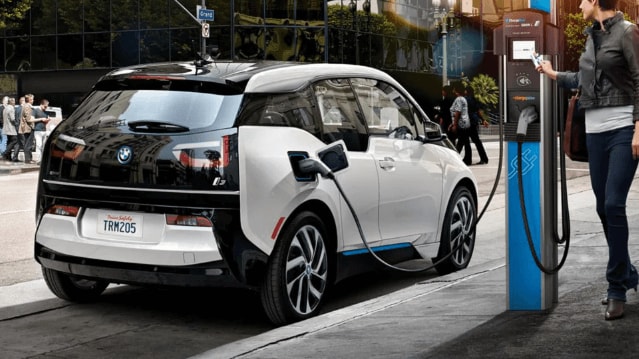
Another more commonly known technology is that of electric vehicles also known as ‘EV’ cars. These completely abandon the internal combustion engine and instead have an electric motor powered by a rechargeable battery.
These work pretty much like any electronic device like a phone or a laptop.
When you drain your battery you could recharge it either at home or at designated charging stations. However the challenge becomes where these charging stations are located. In more developed countries these stations are more available and accessible. However in developing countries, these stations are very few or non-existent. However some electric cars have incredible range on a single charge, therefore city driving can be manageable when one can drive back home and recharge.
Another concern may be that electric vehicles are slow and may struggle to keep up with highway speeds. This might be true for some smaller EV cars, as they are designed for moving within towns and urban areas. However some manufacturers like Tesla are developing very powerful EV’s that can easily cope with the best of conventional sports cars.
Tesla’s model P100 D has proved to be faster than some thoroughbred sports cars, the likes of the Ford Mustang and The Camaro have proved to be no match for the Tesla.
Another upcoming but little known power source for vehicles is the hydrogen fuel cell. A hydrogen tank in the car mixes the gas with oxygen naturally occurring in the air which produces water. This reaction produces electricity which will in turn charge a battery which powers a motor that moves the car. This however poses the problem of accessing hydrogen as it is not readily available in large amounts.
Another problem may arise in the fact that carrying a hydrogen tank in your car is equivalent to strapping on a bomb in the case of an accident, as hydrogen is extremely flammable and unstable.
However all the problems and challenges stated are not things that cannot be overcome through time and with advancements in technology, even more efficient and reliable systems may be invented. Who knows what the future holds for the automobile, maybe the dreams and visions of movie makers of flying cars may not be so far off after all, considering the leaps the automobile has taken in the last century.
 The Auto-zone